
 REVIEWS
How to Order Custom Patches with No Minimum
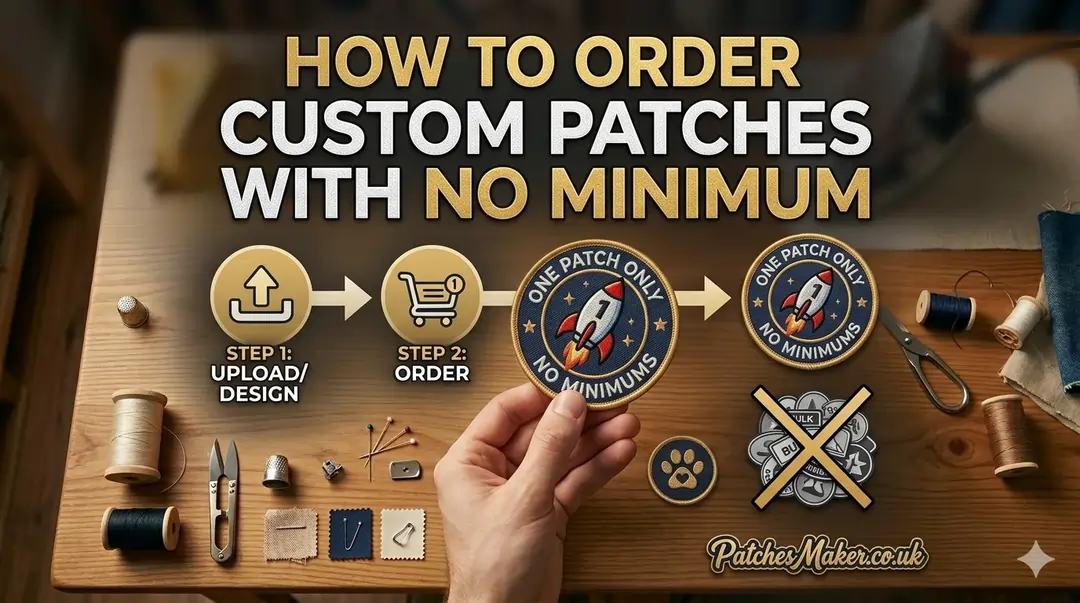
Ordering custom patches with no minimum is easier than ever. Starting a streetwear brand or creating custom merchandise used to require massive upfront costs. Factories forced buyers to purchase hundreds of units per design to cover setup fees. This system made it incredibly difficult for independent creators and casual hobbyists to get started.
The manufacturing landscape has completely transformed. Now you can easily order custom patches with no minimum order requirements. This means you can buy a single patch for a test sample or print a small batch of twenty for a limited-edition launch. But how is that possible? Keep reading to learn how to navigate small-batch patch ordering like a pro.
The Rise Of No Minimum Order Policies
In traditional manufacturing, factories use massive high-speed industrial machines. Setting up these machines with specific thread colors or heavy metal molds takes significant time and labor. To make that setup profitable, factories demanded large minimum order quantities (MOQs).
However, things have now changed significantly. The no minimum model uses modern digital printing and automated single-head embroidery machines to create personalised patches UK. This technology allows manufacturers to switch designs instantly without wasting time or raw materials.
No minimum order policies benefit customers in the following ways.
| Zero Wasted Inventory | Buy what you need without unsold patches sitting in your closet |
| Affordability | Test design colors and quality on a single patch before placing bulk orders |
| Customization | Create highly personalized items, such as unique patches for employees |
Choosing the Right Patch Type for Small Batches
Not every patch style is cost-effective at low quantities. Some styles require physical molds that drive up the price of a single patch, while others are built for cheap and rapid digital production.
Let’s take a look at different patch types and the production financial reality associated with them.
- Embroidered Patches
Are considered the best choice for minimum orders.
The high-speed digital embroidery machines read vector files instantly. This makes single-unit production highly affordable.
- Woven Patches
Woven styles require setting up complex industrial machines. Factories rarely offer them with no minimums because of the high mechanical setup time.
- Printed (Sublimated)
Uses high-resolution digital ink pressed directly onto blank fabric. It is the easiest and cheapest way to create a single custom patch and a great choice for minimum orders as well.
- PVC (Rubber)
PVC patches require a custom metal mold carved by a CNC machine. The mold cost alone makes a single patch extremely expensive.
This is why most of the service providers do not offer them without a custom patches no minimum order policy.
Designing Low-Quantity Patches for Success
Most of the manufacturers will often spend hours manually cleaning up your artwork for free when you are ordering in bulk. However, when you order a single patch, you need to deliver clean, production-ready files to avoid high design setup fees.
Remember these few key considerations before sending your design files.
- Use Pure Vector Formats
Always save your artwork in clean vector formats such as SVG, PDF, or EPS. Vector lines can scale to any size without losing crispness.
- Keep Text Bold and Clear
Tiny letters will blur together on a physical patch. You need to ensure that your fonts are bold, clean, and at least 0.25 inches tall for maximum legibility.
- Limit the Colors
Limiting your design to 3 or 4 solid colors keeps the military patches looking sharp and well-organized, even with digital embroidery.
- Selecting the Best Small-Batch Backing
The backing you choose changes how your patch functions and handles daily wear. You should choose options that are incredibly easy to apply at home without commercial machinery for small batches and DIY projects.
Selecting The Patch Attachment Methods
Let’s take a look at the most popular backing methods.
- Iron-On (Heat Seal)
The most popular choice for small projects. You can apply these patches using a standard household iron in less than a minute. It works beautifully on canvas bags and denim jackets.
- Sew-On (Plain Backing)
This option leaves the back of the patch soft and flexible. It is the most durable choice for heavy outerwear and gear that goes through heavy commercial washing machines.
- Hook and Loop (Velcro)
Velcro patches are the perfect choice for team uniforms and hats. It allows you to swap different patch designs out instantly on a single garment.
Getting an Accurate Production Quote
You need to know your exact costs before any machinery turns on. Custom manufacturing prices depend on design complexity and backing choices. Getting a clear quote prevents unexpected billing surprises later.
Here is what you need to do:
- Submit the final dimensions of your patch
- Tell your supplier the exact number of patches
- State that date immediately to avoid rush fees
Confirming Your Digital Production Proof
The factory will send you a digital production proof once you accept the initial price quote. This is a vital quality control step. It is your absolute last chance to fix design errors before the factory creates the physical patch.
- Check the Text
Spellcheck every single letter. Look closely at small vowels to ensure they will not blur together during stitching.
Before deciding on the iron-on patches vs. sew-on patches, you need to verify the color matches. Ensure the digital Pantone codes listed on the proof match your brand’s official color guide.
- Approve the Borders
Look at the outer margin line. Make sure it gives your main design enough room to breathe.
- The Approval Rule
Never rush this step. The factory locks in the design file once you click approve proof. You cannot make changes after this point without paying a heavy reset fee.
Step-by-Step Guide to Placing Your Order
Ordering custom merchandise should not feel like a hectic task. Working with a reputable supplier makes things easier for most of the customers.
Let’s take a look at a streamlined workflow offered by most of the suppliers. This ensures a smooth, error-free production cycle along with some extra peace of mind!
- Prepare Your Graphic Art
Convert your logo into a high-resolution vector file. Make sure your background layer is completely transparent.
- Determine the Exact Size
Before the step of thinking about how to iron on patches like a pro arises, you need to use a physical tape measure on your garment to find the perfect dimensions. Patches are typically measured by averaging the width and height.
- Select Your Edge Finish
Choose a classic, raised merrowed border for traditional shapes like circles and shields. Choose a laser-cut border for complex and custom geometric shapes.
- Submit for Digital Proofing
A reliable small-batch manufacturer will send you a digital proof showing exactly where the needles will stitch. Review this proof carefully for spelling or layout errors before giving final approval.
FAQS
Are custom patches with no minimum more expensive per unit?
Yes, individual unit costs are naturally higher when you buy in small quantities. A single custom embroidered patch can cost $15 to $20 to cover the artwork digitizing and machine calibration costs. However, the price per patch often drops significantly to just $2 or $3 per unit when you choose that same design up to 100 units.
Can I get a physical sample before ordering a small batch?
Most no minimum suppliers do not offer a free physical sample because the cost of making one patch is the cost of the order. Instead, they will send you a high-resolution digital layout proof or a photo of a digital stitch-out simulation.
What types of clothing fabric are bad for iron-on patches?
You should never try to iron a patch onto synthetic fabrics with low melting points, such as delicate silk and sheer nylon. The intense heat required to melt the patch adhesive will scorch or melt these synthetic fibers. Always choose a plain backing and sew the patch on manually on it.
Key Takeaways
The elimination of strict factory minimums has completely leveled the patch ordering journey for independent creators. You no longer need a massive venture capital budget to see your branding designs brought to life on premium apparel. You can easily start with small, risk-free batches, test them in the market, gather feedback, and scale your production naturally as your brand grows!

As the content specialist for PatchesMaker.co.uk, I focus on delivering practical insights into the world of custom patch manufacturing across the UK. My blogs cover everything from military and morale patches to promotional and corporate branding solutions. I break down production processes, quality standards, backing options, and design considerations in a clear and professional manner. Through informative and research-driven content, I aim to help businesses, sports teams, and institutions make confident decisions when investing in custom patches that reflect their brand values.