
 REVIEWS
How Custom Embroidered Patches Are Made: The UK Design & Stitch Process
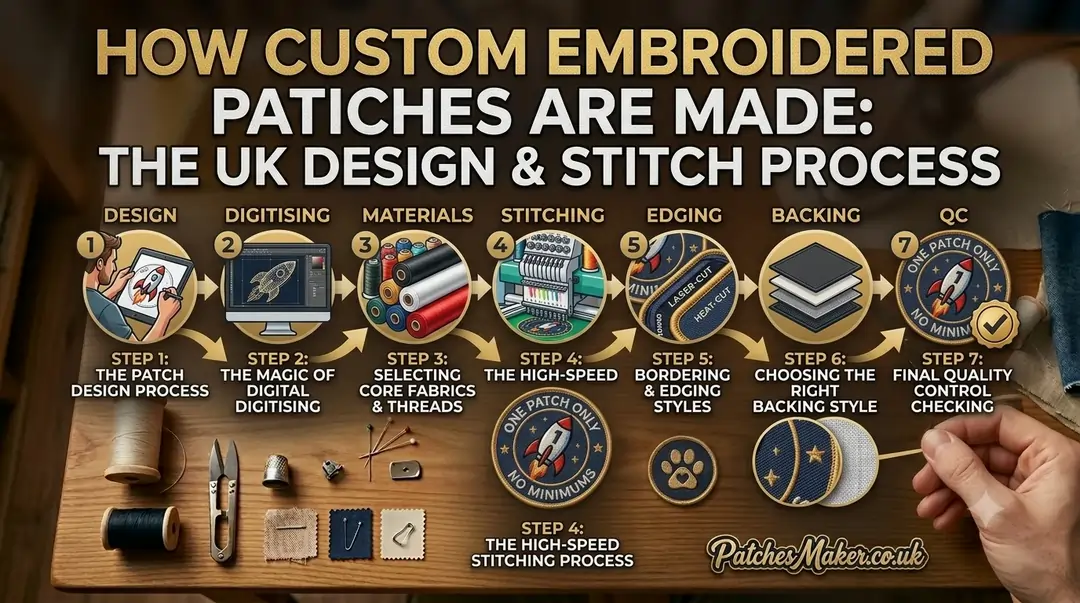
Applying a patch to your clothing is easy. Sew it or iron it; it will only take a few minutes. But have you ever observed that stitched masterpiece closely? The intricate details, the texture, how did it all come into place? Did it actually take these few minutes as well? Well, no…. Creating custom patches is a lengthy, yet fun process. Understanding this journey can help you in several ways, from choosing the right provider to setting clear expectations during the ordering process!
Keep reading to know how the British embroidery industry combines traditional craftsmanship with cutting-edge machinery to produce high-quality custom embroidered patches.
How Are Custom Embroidered Patches Created?
Here is what goes on behind the scenes of creating high-quality custom embroidered patches.
Step 1- The Patch Design Process
Every great custom patch begins with a concept. Customers usually submit their ideas as a digital file in the form of:
- Simple smartphone photo
- Rough pencil sketch
- Fully polished vector graphic
The design stage requires close collaboration to ensure the final product looks exactly as intended. Experienced UK design teams review the artwork to check for details that might not translate well into thread.
The design rules for a custom patch are:
- Readable Font Sizes
Text needs to be legible. Letters should generally be at least 4mm tall so the physical stitches do not bunch up into an unreadable knot.
- Proper Colour Selection
True physical threads do not match computer screens perfectly. Designers map your digital colours to standard thread colour charts, such as Pantone.
- Prioritising Simplification
Extremely complex gradients or tiny photographic details often need to be simplified into solid, clean lines for the neatest look.
Step 2-The Magic of Digital Digitising
You cannot simply plug a regular image file into an industrial embroidery machine and press start. The machine will not know what to do. The file must undergo a conversion process called digitising.
Digitising is the absolute core of the custom patch process. A specialist designer maps out every single individual stitch by hand using advanced technical software.
The digitiser plots the coordinate pathways for the machine needle to follow. They take crucial decisions regarding the three main stitch types:
| Running stitches | Thin, single lines of thread are used for fine outlines and delicate details |
| Sating Stitches | Stitches that create smooth, shiny borders and crisp lettering |
| Fill stitches | Dense blocks of repeating stitches fill large background areas |
Step 3- Selecting Core Fabrics and Threads
Once the digital plan is finalised, it is time to choose the physical components. The quality of a patch relies entirely on the durability of the materials chosen.
- The Foundation-Twill Fabric
The background material of a standard embroidered patch is almost always a heavy-duty polyester or poly-cotton twill.
Twill features a diagonal weave pattern that can withstand thousands of high-speed needle punctures without tearing.
- The Thread- Rayon vs. Polyester
So, how to make patches with embroidery machine? The answer depends on your thread choice as well.
The UK patch makers primarily choose between two main types of high-quality embroidery thread:
| Polyester Thread | Rayon Thread |
| Exceptionally strong, fade-resistant, and entirely bleach-safe | High gloss and incredibly smooth texture |
| Best used for workwear, sports kits, and outdoor gear | Fashion garments, indoor decorative patches, and fine detail work |
Step 4- The High-Speed Stitching Process
The physical production begins after the materials are chosen and the digital file is ready. The twill fabric is stretched tightly over a large framing system alongside a dense backing material called a stabiliser. This ensures the fabric stays perfectly flat and rigid while moving.
Here is what happens:
- Fabric Prep
- Hooping with Stabiliser
- Machine Stitching
- Thread Trimming
The frames are locked securely into massive, multi-head industrial embroidery machines. These incredible machines often feature up to 15 needles per head, which allows them to stitch multiple colours simultaneously at speeds exceeding 1,000 stitches per minute.
Step 5- Bordering and Edging Styles
Once the main embroidery design is complete, the individual patches must be cut from the larger sheet of fabric to give a clean, fray-proof edge.
There are two primary types of patch borders used in the UK:
- Merrowed Borders (Overlocked)
A merrowed border is a classic, thick, rounded edge that wraps completely around the outside of the patch. This is done using a specialised overlocking machine. It provides a heavy, traditional look and completely prevents any edge fraying.
This option works best for simple shapes like
- Circles
- Rectangles
- Shields
- Squares
- Laser-Cut Borders (Hot Cut)
A merrowing machine cannot navigate the tight corners of complex and intricate custom shapes. Instead, a precision laser is needed to cut the patch out.
The high heat of the laser seals the edges of the polyester twill automatically, which creates a clean and flat finish for your custom patches.
Step 6- Choosing the Right Backing Style
How the patch will be attached to a garment determines the type of backing applied during the final production stage.
The backing options include:
- Sew-On Backing
A sew-on backing is a traditional and permanent choice.
- The back of the patch is left as raw fabric or covered with a thin protective mesh.
- This requires stitching around the edge by hand or a sewing machine.
- It is the most durable and flexible option available.
- Iron-On Backing (Heat Seal)
A quick and convenient choice.
- A layer of dry, heat-activated adhesive is melted onto the back of the patch.
- Requires a hot household iron or a commercial heat press for attachment.
- The glue melts again and fuses securely to the garment fabric.
- Hook and Loop Backing (Velcro)
An interchangeable choice.
- The rough hook side of a Velcro piece is stitched directly onto the back of the patch.
- This is incredibly popular for military uniforms and tactical gear.
- Patches can be swapped instantly when needed.
Step 7- Final Quality Control Checking
The final step is a strict quality inspection. Every single patch is examined by human eyes under bright lighting.
Quality control staff look for:
- Any stray loose threads
- Make sure the colours align without gaps
- Test the strength of the borders
After approval, the patches are lightly pressed, counted, packed up, and shipped out across the UK to your doorstep!
How to Choose an Embroidered Patch Supplier In The UK
One of the most important embroidered patches mistakes to avoid is choosing the wrong service provider.
Finding the right partner to manufacture your patches keeps you from wasting time and money. Look for these key markers while searching for a supplier.
- Material Variety
A great supplier doesn’t just do standard embroidery. They should offer PVC (rubberised), woven, chenille, and leather options to match your brand’s aesthetic.
- Low Minimum Order Quantities (MOQs)
Look for suppliers who offer flexible minimums (like 10 to 50 pieces) so you can test the patches before placing a massive order.
- Proofing and Samples
Always choose a vendor that provides a digital mock-up or a physical pre-production sample for your approval before running the entire batch.
- Transparent Communication
Choose someone who clearly outlines their production shipping costs and setup fees upfront so you don’t have to pay a surprise fee with every order.
How Do Businesses Make Use of Custom Embroidered Patches?
Custom patches are incredibly versatile tools for team building and generating revenue.
Here is how modern businesses use them in their daily operations.
| Uniform Branding | Application of a patch gives employees a unified and polished look |
| Retail Merchandise | Businesses give them away or sell them at shows and product launches |
| Customer Loyalty | Giving away patches creates an emotional connection with customers |
| Recognition | Businesses create special achievement patches to boost team morale |
What Factors Affect the Final Price of a Patch?
The cost of a custom patch fluctuates based on production complexity. Keep these factors in mind before placing your order.
- Size and Thread Coverage
Larger patches cost more because they require more materials. The price of embroidered patches scales by the percentage of thread coverage (e.g., 50% vs. 100% full embroidery).
- Backing Type
Simple iron-on or sew-on backings are the most budget-friendly. Premium options like hook-and-loop (Velcro), magnetic, or adhesive backings add to the unit cost.
- Order Volume
Setting up embroidery machines or creating moulds takes time. This is why bulk orders lower your cost per patch significantly. Buying 100 morale patches is always cheaper per piece than buying 20.
- Design Complexity
High colour counts, intricate text, and detailed borders increase production time and raise the price.
FAQs
What is the difference between 50%, 75%, and 100% embroidery?
The % refers to how much of the background twill fabric is covered by thread. A 50% embroidered patch leaves half of the twill fabric visible as the background; a 75% embroidered patch leaves roughly 25% of the area exposed; and a 100% embroidered patch is completely covered in solid stitching.
Can any logo be made into an embroidered patch?
Most logos can be adapted easily, but very complex designs with gradients or tiny text may require slight modifications. Simplifying fine details or enlarging text slightly during the digitising stage ensures the patch looks crisp and legible when rendered in real thread.
Will iron-on patches stay attached in a washing machine wash?
Yes, high-quality UK iron-on backings are designed to withstand regular washing machine cycles. However, for garments that face heavy wear or harsh industrial washing, like rugged work uniforms, adding a few small anchor stitches around the border provides ultimate security.
Key Takeaways
The journey of a custom embroidered patch from a simple screen drawing to a tangible, tactile piece of branding is a fascinating mix of technology and art. By understanding the importance of expert digitising, selecting border styles that match the backing for your project needs, and choosing a trustworthy supplier, you can easily design a durable patch that stands out in the UK market.

As the content specialist for PatchesMaker.co.uk, I focus on delivering practical insights into the world of custom patch manufacturing across the UK. My blogs cover everything from military and morale patches to promotional and corporate branding solutions. I break down production processes, quality standards, backing options, and design considerations in a clear and professional manner. Through informative and research-driven content, I aim to help businesses, sports teams, and institutions make confident decisions when investing in custom patches that reflect their brand values.