
 REVIEWS
How to Remove Iron-On Patches in Minutes (No Mess, No Stress)
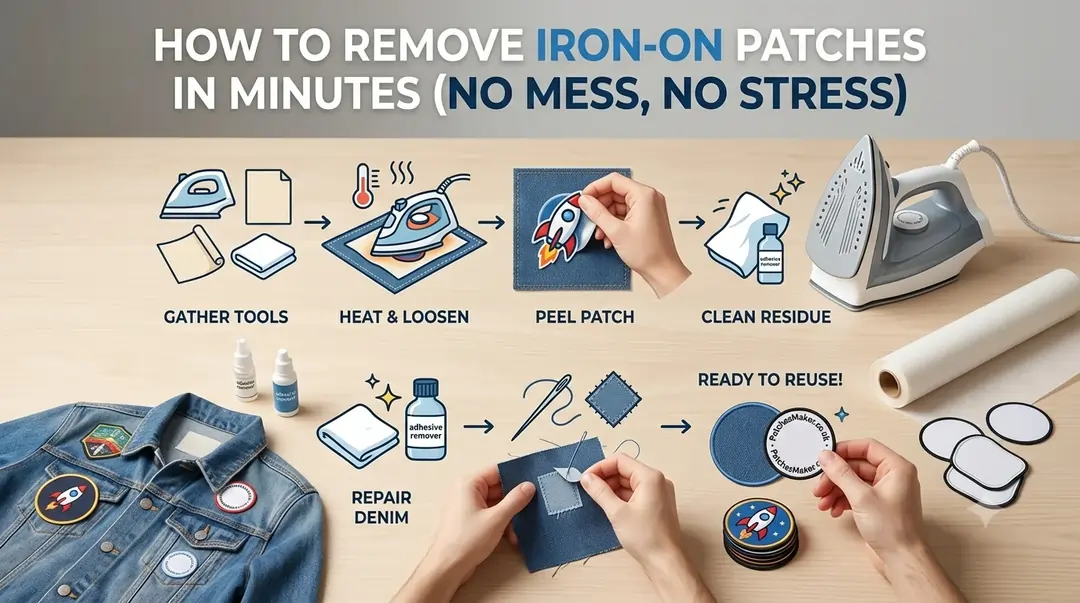
Most of the iron-on patches can be removed at home without creating a disaster. You don’t need specialised equipment, and you certainly don’t need to throw away a perfectly good garment of yours.
There is usually a story behind every patch.
Maybe it was added to personalise a denim jacket, or the patch served a practical purpose, covering a tear or stain that nobody wanted to see.
Then one day, circumstances change.
The jacket gets an update. The uniform needs a new logo. The design no longer fits your style.
That’s when many people discover something they hadn’t considered when applying the patch in the first place: removing it isn’t always as simple as pulling it off.
Keep reading to learn how to remove them from your clothes within minutes!
The Simplest Way To Get Rid Of Your Iron-On Patch
Iron-on patches are designed to stay attached. The adhesive backing is activated by heat, creating a strong bond with the fabric. Fortunately, that same heat can often be used to reverse the process.
The key is patience and using the right method for the fabric you’re working with.
Let’s take a look at the steps to remove custom iron on patches while maintaining your clothes’ quality.
- Check the Fabric Before You Start
Patch removal becomes difficult when people focus on the patch and forget about the material underneath.
Here is what you need to keep in mind:
- A thick denim jacket can usually tolerate more heat than a lightweight polyester shirt.
- Similarly, delicate fabrics may react differently when exposed to an iron or heat source.
Check the garment’s care label before doing anything else.
Pay attention to:
- Recommended ironing temperatures
- Fabric composition
- Special care instructions
Spending thirty seconds checking the label can save you from discovering a melted or damaged garment later!
- Use An Iron ( The Most Reliable Choice)
The iron method remains the simplest and most effective approach for most of the
You’ll need:
- An iron
- A thin towel or pressing cloth
- Tweezers or a dull knife
- A clean work surface
So, how to remove iron-on patches using this method?
- Start by placing the garment on a flat surface
- Position the towel over the patch and set the iron to an appropriate temperature
- Allow the heat to penetrate the patch for around 15 to 30 seconds
- Once heated, carefully lift one corner using tweezers or a dull edge
- If the patch begins lifting easily, continue peeling it away slowly
- Apply heat again if it resists
Remember, your patience matters here. Many people damage fabrics because they try to force a patch that isn’t ready to release.
Why Some Patches Come Off Easily While Others Don’t?
According to professional patch makers UK, iron-on patches differ in their details.
Some are attached using standard heat-activated adhesives, whereas others include additional stitching for reinforcement.
If you’ve ever struggled with a stubborn patch while watching someone else remove theirs effortlessly, this difference is often the reason.
A patch secured with both adhesive and stitching will usually require two separate steps:
- Remove the stitching.
- Soften and remove the adhesive.
Skipping the stitching stage often results in unnecessary pulling and fabric stress.
- The Hair Dryer Method
Not everyone owns an iron, and sometimes you’re dealing with a garment that’s difficult to lay flat.
Using a hair dryer can provide you with enough heat to loosen lighter adhesive bonds.
Here is how it works:
- Hold the dryer several inches from the patch
- Blow direct hot air across the surface for a minute or two
- Afterwards, test a corner gently
This method typically works best on recently applied patches and lightweight garments. Older patches with years of wear may require stronger heat.
What To Do When A Faint Outline Remains?
The appearance of a shadow or outline is considered one of the most common concerns after patch removal.
People often assume they’ve damaged the garment. But in reality? The fabric underneath the patch has simply aged differently.
Think about it.
The surrounding material has been exposed to everyday sunlight and frequent washing. But the section hidden beneath the patch was protected all this time.
This difference can create a visible contrast after removal, which is often misunderstood as damage.
The effect is particularly common on:
- Denim jackets
- Work uniforms
- School bags
- Canvas materials
Repeated washing can gradually reduce the visibility of the outline.
What Happens After the Patch Comes Off?
Removing the patch is usually only half the job. The adhesive often leaves behind residue. Sometimes it’s barely noticeable, but other times it creates a rough or sticky area that attracts lint and dust.
In many iron-on vs sew-on discussions, adhesive residue is one of the most frequently mentioned drawbacks.
You might panic at first, but remember, this is completely normal, and it comes with a solution as well!
Here is what you need to do:
- Removing Leftover Adhesive
The approach depends on how much residue remains. Reheating the area and gently rubbing it with a cloth can remove much of the adhesive for small amounts.
However, if you are stuck with a stubborn residue, fabric-safe adhesive removers can help.
Make sure to test your product on a hidden section of the garment before its application.
You can also try placing a clean cloth over the residue and applying gentle heat again. In many cases, softened adhesive transfers from the garment onto the cloth.
This simple trick surprises many people because of how effective it can be!
Which Fabrics Will Require Extra Caution?
Certain materials lying in your wardrobe will deserve a slower approach.
For example:
- Synthetic fabrics can react poorly to excessive heat
- Leather and faux leather can be especially challenging as well
It is worth considering whether professional assistance might be the safer option before attempting the patch removal process on these special materials.
Some Common Mistakes That Make Patch Removal Harder
Patch-removal disasters often happen because people try to rush the process while ignoring the patch care guide.
Here are some of the most common mistakes:
- Pulling Before the Adhesive Softens
This can stretch your fabric and leave behind larger amounts of residue.
- Using Excessive Heat
Applying more heat doesn’t always mean faster results. Too much of it may damage the garment before it loosens the adhesive!
- Ignoring Fabric Care Instructions
Each fabric has different limits. Treating every garment the same way can create avoidable problems.
- Using Sharp Tools
A sharp blade may seem helpful, but it can easily cut the material underneath. This is why gentle tools are usually the better choice.
Can You Reuse an Iron-On Patch?
The answer to this question depends on the patch and its condition after removal.
Some patches survive the process reasonably well and can be reattached using fresh adhesive backing. On the other hand, some lose their shape or adhesive properties during removal.
This is why you need to be extra careful during removal if you are planning to reuse the patch.
The less stress placed on the patch itself, the better the chances are of preserving it!
What If the Patch Refuses to Leave?
Occasionally, you’ll encounter custom back patches that seem permanently attached.
This usually happens when:
- The adhesive has aged significantly
- Additional glues were used
- Heat settings are too low
- The patch includes hidden stitching
Your focus should be on identifying the underlying issue instead of increasing the force during this moment.
A Quick Comparison of Common Removal Methods
The most common methods for your “how to remove iron-on patches” related concerns are.
| Method | Best For | Difficulty Level |
| Iron | Most iron-on patches | Easy |
| Hair Dryer | Light adhesive applications | Easy |
| Adhesive Remover | Residue Cleanup | Moderate |
| Professional Alteration Service | Delicate fabrics | Easy for the owner |
| Steam Treatment | Stubborn Adhesive | Moderate |
No single method would work for every situation. You need to choose the right approach, which often depends on the garment itself.
Answering Common Questions From Readers
Can you remove an iron-on patch with a hair straightener?
Yes. A hair straightener can soften the adhesive on smaller patches, making them easier to peel away. Just be careful not to overheat delicate fabrics.
How long should I wait before applying a new patch in the same spot?
It’s best to clean the area thoroughly and ensure all adhesive residue is removed before attaching a replacement patch.
Does washing a garment help loosen an iron-on patch?
Regular washing alone rarely removes a properly attached patch. Heat is typically required to soften the adhesive bond.
Can an iron-on patch be moved to another garment?
Sometimes. If your patch remains intact during removal, it may be possible to reattach it using fresh adhesive backing.
Can patch adhesive stain clothing permanently?
Usually not, but older adhesives may leave discolouration on certain fabrics. The outcome often depends on the material and how long the patch has been attached.
Final Thoughts
Removing an iron-on patch can feel intimidating the first time, especially if you’re working with a favourite jacket or a bag. The patch may seem firmly attached, but most can be removed successfully with a little heat and patience. The biggest mistake people make is trying to rush the process. So focus on using extra softening adhesive and working carefully, which can yield cleaner results and less frustration.

As the content specialist for PatchesMaker.co.uk, I focus on delivering practical insights into the world of custom patch manufacturing across the UK. My blogs cover everything from military and morale patches to promotional and corporate branding solutions. I break down production processes, quality standards, backing options, and design considerations in a clear and professional manner. Through informative and research-driven content, I aim to help businesses, sports teams, and institutions make confident decisions when investing in custom patches that reflect their brand values.