
 REVIEWS
How to Choose Between Embroidered, Woven, and PVC Patches
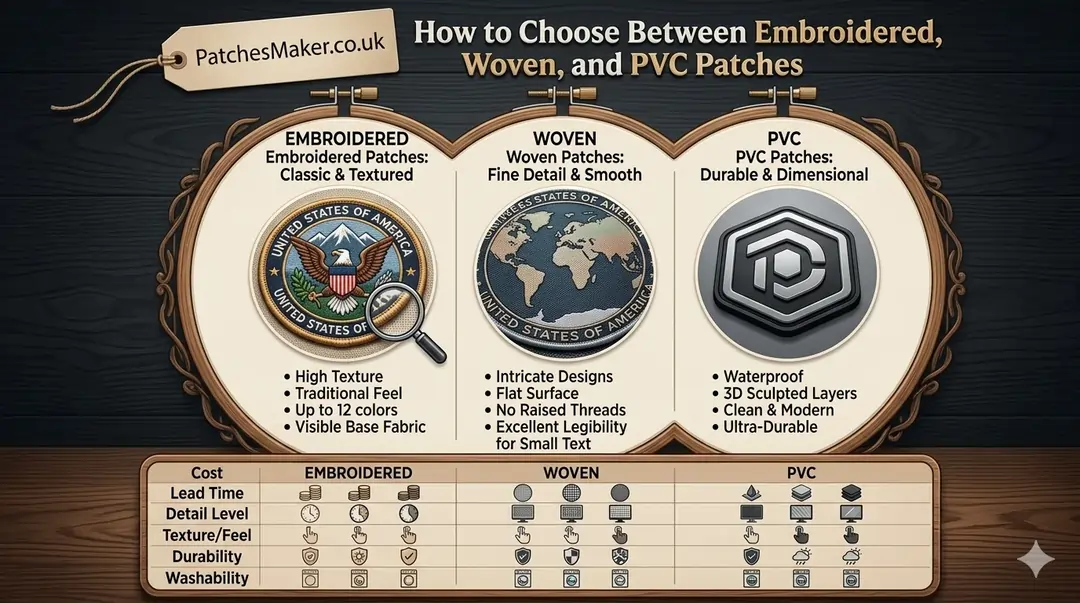
To assist consumers in understanding how embroidered, woven, and PVC patches differ from each other and help them choose the right one, depending on the desired factors.
Why Patch Choice Matters More Than You Think
Did you ever think that patches created by the same technique and process could look completely different once added to your clothing? While one patch would look soft and fluffy, another could be flat and detailed, and yet another could look glossy, like rubber.
Patches are more than just ornaments. They represent your brand, logo, or even your identity that adds to your clothing, workwear, or any accessories. Depending on the material, each patch has specific qualities.
Are you looking for a mere decoration, or do you want your patch to serve a functional purpose too? Let’s get equipped with the characteristics of the three main types of patches and make a wise choice.
Embroidered Patches: Classic and Bold Identity
The embroidery patch is probably the most classic and well-known patch. It is made through the stitching of threads on cloth to create a raised, textured look that is unique and visible.
Custom embroidered patches function best on fabrics that are bolder in nature, with simpler shapes rather than complex ones.
Custom embroidery patches are mostly found on uniforms, jackets, clubs, and businesses because they have a professional look that can stand out even from a large distance.
Woven Patches: Fine Detail and Smooth Finish
These patches are designed to be accurate; they do not use heavy threads in their patterns; rather, they use light threads woven closely, enabling them to produce intricate designs.
In fact, these patches can even accommodate designs with text and fine lines.
However, they are unable to produce the raised surface like embroidered patches because of their smooth nature.
PVC Patches: Durable and Modern Look
They have a three-dimensional appearance because of their rubber-like composition, which allows them to be versatile when used. They are both waterproof and strong.
While other patch varieties rely on threads to form, those made from PVC cannot fray, fade, or become disfigured easily. Thus, they are ideal for use during sporting events and military missions.
Due to their sleek design, they appear more modern, making them suitable for brands that desire a visually stunning brand identity.
Comparison of Embroidered, Woven, and PVC Patches
However, before selecting the appropriate design for your patch, it is crucial to know its practical characteristics.
Embroidery, woven, and PVC patches can be applied to various purposes, and each has unique advantages with respect to their complexity, texture, and durability.
The following table will help distinguish between different types of patches:
| Property | Embroidered Patches | Woven Patches | PVC Patches |
| Material Type | Thread on fabric backing | Raised texture of tight thread weave | Plastic-like rubber material |
| Texture Feel | Raised, bold, and textured effect | Flat and smooth effect | 3-Dimensional, flexible rubber effect |
| Design Detail Level | Great for simple to medium design work | Perfect for detailed, small text | Excellent for bold design, fine details |
| Durability | Very durable and long lasting | Moderately durable, suitable for occasional use | Exceptionally durable and water/weather proof |
| Weather Resistance | Can be subject to wear and tear over time | Resistant to heavy washing | Extremely resistant to heavy use and washing |
| Color Vibrancy | Limited by available thread colors | Finer details, muted colors | bold and vibrant color options |
| Weight & Thickness | Moderate thickness and bulk | Small thickness and lighter weight | Moderate thickness with sturdy construction |
| Flexibility | Variable flexibility depending on stitch density | Excessively flexible and soft | Highly flexible yet structural plastic/rubber material |
| Best Use Cases | Perfect for uniforms and clubs | Logo placement, branded apparel | Sportswear, tactical, and outdoor wear |
| Edge Finish Options | Edge finishing using a merrow machine | Clean edge finishing process | Molded edges with a waterproofing and sealing process |
| Wash Resistance | Satisfactory with good durability | Moderate with some wear tolerance | Exceptionally high with heavy wash tolerance |
| Cost Range | The cheapest option available | slightly more expensive than other options | most expensive but best value |
| Brand Impression | Classic, traditional, and professional | Modern and detailed style | Bold and rugged design |
How to Choose the Right Patch Type?
Choosing the right patch type depends on the use and application.
Embroidered patches have a traditional appearance with texture; woven patches tend to have detailed designs and smooth finishes, whereas PVC patches have a modern look that is durable and long-lasting.
Thus, it is necessary to consider suitable materials based on the application and design requirements. The fabric’s nature, durability, and complexity will help select the right patch.
Why Embroidered Patches are the perfect choice?
Embroidered patches work best when there is a need to have a bold, textured look for the logo and traditional design. These patches are mainly used in school and sports uniforms, military designs, and fashionable jackets.
The important details of custom embroidered patches are their three-dimensional nature, which makes them visible from afar and attracts attention immediately.
These are ideal if you wish to have something that is not only stylish but also strong and durable. They combine the best quality material, which makes them a perfect choice.
When Woven Patches Are a Better Fit
Woven patches are ideal for places where precision is valued over aesthetics. They are common in branding designs featuring small text and detailed illustrations.
It has a smooth surface, unlike embroidery patches, giving it a sleek appearance that makes it suitable for contemporary fashion collections and products.
They are thin, allowing them to blend seamlessly into various apparel and accessories.
What Makes PVC Patches Stand Out?
PVC morale patches stand out where strength is the top priority. They work well in harsh outdoor conditions and bad weather, as well as under heavy use.
The rubber-type material protects against wearing away after extended use.
Cleaning and maintenance are straightforward, making them suitable for tactical and sports activities.
When modern and strong-looking designs are needed, PVC patches might be the best choice.
Many people are inclined to believe that choosing custom patches UK depends solely on selecting a desired pattern. However, after starting the comparison between embroidered, woven, and PVC patches, all these doubts arise.
Why does one patch have a higher price? Why is the same design sharp in one version but bold in the other? And why can some patches withstand outdoor wear while others are better suited for clothes?
Most commonly, confusion arises from a lack of knowledge about the materials used to make patches. Complex designs can become blurry when embroidered, while the PVC option may be too stiff for light clothing.
A patch design that looks ideal on your computer screen might not look ideal when applied to jackets, sports apparel, backpacks, or uniforms.
It is crucial to know the texture, flexibility, durability, and material when selecting the right patch.
Comparing Patch Types in Real Use
Here is an easy-to-understand comparison that will help you make your decision:
- Embroidered patches look classic and strong, but lack complex designs.
- Woven patches provide detailed graphics but lack texture.
- PVC patches are highly durable but have a modern rubber-like texture.
All three have their pros and cons, and which one you will use depends on your priorities.
Benefits of Choosing the Right Patch
Selecting the right patch type for yourself ensures that both aesthetics and functionality are enhanced. The right material choice not only enhances branding efforts but also ensures the product lasts longer.
Furthermore, it will eliminate problems such as fading, unclear logos, and wear and tear.
The initial selection of the proper material saves costs by reducing the need for subsequent modifications.
FAQs
How do woven and embroidered patches differ from each other?
Patches made of woven material are sewn from thin threads and appear smooth, whereas embroidered patches are made from thick threads and have a raised look.
Are PVC patches stronger than embroidered patches?
Yes, without a doubt, because of its resistance to water and UV light and its flexibility, PVC morale patches are stronger than embroidered ones.
Can we apply embroidered patches to various fabrics?
Embroidered patches would be more appropriate for thicker fabrics like jackets and uniforms, since stitches hold up better on such fabrics.
Conclusion
It will be much easier for you to select your ideal patch once you understand what each patch is for.
Some are perfect for creating stylish designs, some for creating elegant and elaborate patches, while some are sturdy enough to withstand outdoor activities.
Selecting the right kind of patches does not depend only on prevailing fashions.
A little extra time invested in selecting an appropriate texture and durability for the product might prevent you from making the wrong choices later. Oftentimes, it is just that little patch that can make a huge difference in your design.

As the content specialist for PatchesMaker.co.uk, I focus on delivering practical insights into the world of custom patch manufacturing across the UK. My blogs cover everything from military and morale patches to promotional and corporate branding solutions. I break down production processes, quality standards, backing options, and design considerations in a clear and professional manner. Through informative and research-driven content, I aim to help businesses, sports teams, and institutions make confident decisions when investing in custom patches that reflect their brand values.