
 REVIEWS
How To Add Velcro To A Patch Using Easy Methods & Strong Glues
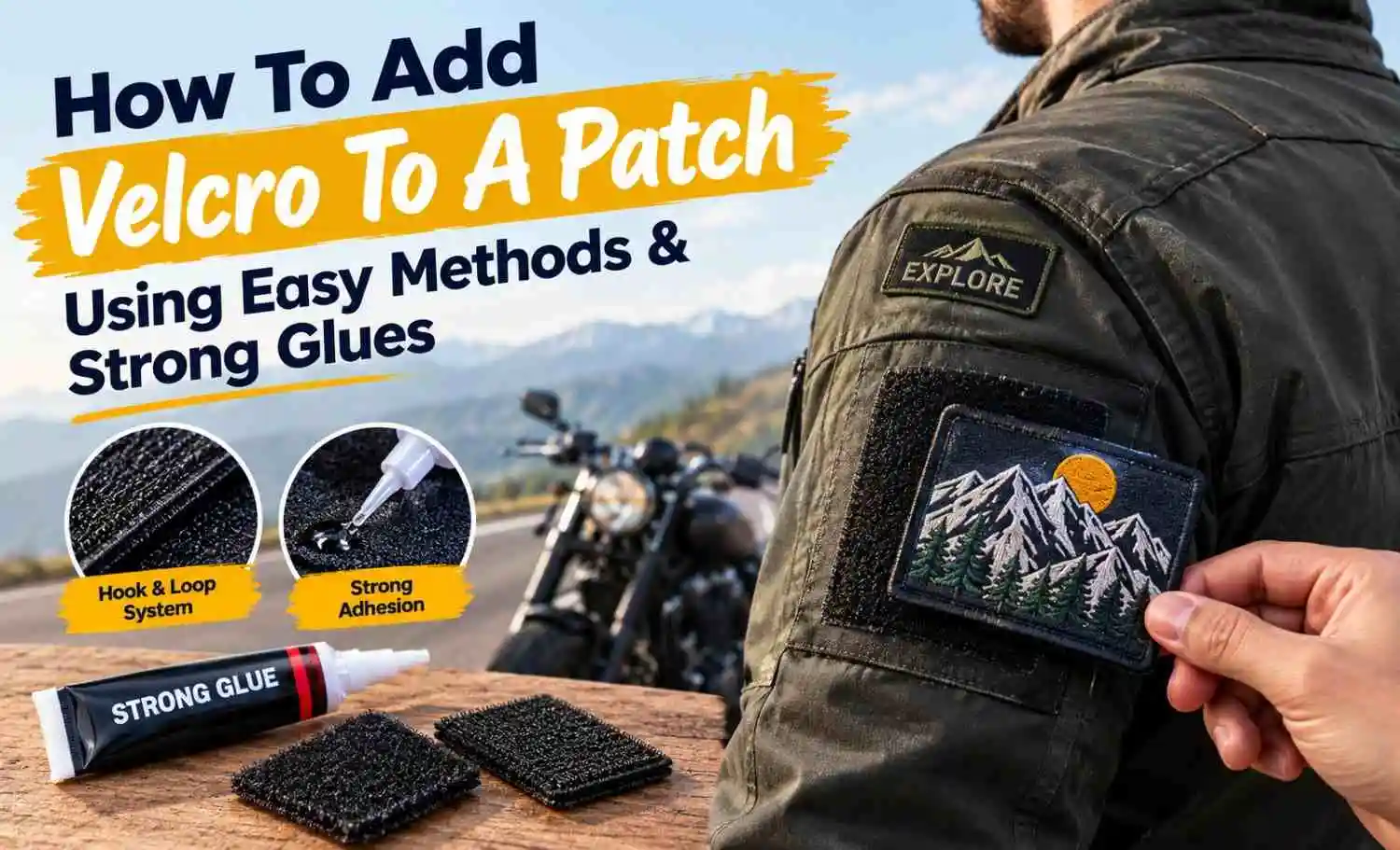
You’ve got a patch you really like, but there’s just one problem. It won’t stay where you put it. You add some Velcro thinking it’ll be an easy job, only to find the patch coming loose, the glue making a mess, or the backing starting to peel away after a few uses.
The best part is that there is no specialised equipment required to make it happen. You can easily do it on your own with the proper Velcro, glue, and patience by following proper instructions given in a Velcro patch guide. Let us take a look at how this can be done.
What Do You Need To Add Velcro To Your Patch?
For doing this, there is no need for many tools. Normally, the following items can get you going include a patch, a Velcro strip, glue, scissors, and a piece of cloth. If you are sewing on the Velcro as well, then a needle and some thread would be needed as well.
Before proceeding, you need to look at the rear side of the patch. There must be no problem with its cleanliness, it must not be dusty or loose-threaded. Otherwise, you will not be able to fix the Velcro properly. The patch intended to be attached to the display bag does not require as much reinforcement as the one intended to be detached from the jacket periodically.
How Can You Add Velcro To A Patch Using Glue?
Glueing Velcro to a patch through the use of glue is one of the simplest ways of attaching it without sewing. Here, the most important thing is making sure that your glue is flexible.
First, measure the back of the patch. Cut the Velcro so it covers most of the usable area without sticking out around the edges. Getting the Velcro patch backing to cover enough of the usable area can help keep the patch secure when it is removed and attached repeatedly.
Step 1: Clean The Back Of The Patch
Using a clean cloth and no water, clean the back of the patch of any dirt and loose fibres. You may even be able to clean the back before you use the adhesive, depending upon the type of material used. This may seem very easy at first, but it will make all the difference to the bonding process.
Step 2: Cut The Velcro To Size
Place the Velcro over the back of the patch and mark where you need to cut it. Try to cover as much of the patch as practical. If you make the Velcro too small, the exposed edges of the patch can lift when you pull it away from the other side.
Step 3: Put On The Glue
Apply a small amount of glue on the back side of the Velcro tape, and Don’t apply much glue to the Velcro tape. More glue does not always guarantee extra strength of attachment. Excessive glue will seep from the edges and harden the patch.
Step 4: Allow It To Dry Properly
Let the patch lie flat during the drying process. You may put any flat surface on top of it for extra pressure as long as it doesn’t damage the patch. The most important thing is to stick to the drying instructions of the glue.
Can You Sew Velcro Onto A Patch?
Yes, and sewing might just be the preferred method if you plan to take off the patch often. Here, you’ll have to sew the Velcro onto the back of the patch while going around its borders using durable thread. In case the patch is big, use some stitches through its middle to prevent the Velcro from lifting.
You might need a sturdy needle for this process, especially when dealing with thick patches. There is also a useful middle ground between glue and sewing. This gives you the neat positioning of glue and the extra hold of stitching. For anyone following a Velcro patch guide, this combination can be useful when a patch needs to handle regular removal.
How Do You Add Velcro To Different Types Of Patches?
Not every patch has the same surface, so you should consider the material before reaching for the glue. This is one reason why a Velcro patch guide should consider the patch material rather than treating every patch in exactly the same way.
Embroidered Patches
As a rule, embroidered patches represent an appropriate surface for sewing and fabric glue application. Should the reverse side be completely sewn, make sure that glue holds the material together. In order to improve the stability of the patch attachment, especially for frequent detachment, you might sew the patch along the edges of the Velcro.
PVC Patches
PVC is unique in its own way because it has a smooth surface, and it does not act like any cloth. This implies that fabric glue will not work, and one should make sure that he uses glue that suits PVC or try it on a smaller patch of the material.
Woven Patches
Usually, woven patches are more flat compared to embroidered patches. You can attach your patch using glue or sew your patch, depending on how frequently you would remove the patch. You need to ensure that the glue is not too thick to pass through the patch.
How Can You Make A Velcro Patch Stay Secure?
Getting the patch to stay attached is mostly about doing the simple things properly. Make sure you:
- Clean the patch before applying anything.
- Cut the Velcro to fit the patch properly.
- Use an adhesive suitable for the materials involved.
- Apply a thin, even layer of glue.
- Press the Velcro firmly into place.
- Give the adhesive enough time to cure.
- Add stitching if the patch will receive heavy use.
Think about how often you will remove the patch, too. If you plan to swap it between jackets, bags, or other items regularly, the attachment will experience much more pulling than a patch that stays in one place. That is why a Velcro patch guide should not treat every patch in the same way. Your material and intended use should decide how much reinforcement you need.
When Are Personalised Velcro Patches A Better Option?
If you need to use the patch repeatedly, then it is better to opt for personalised Velcro patches. Instead of adding the Velcro on your own, the patch would come with the hook-and-loop backings in place, leaving you with the finished product.
It comes in handy when you are looking for custom designs but are likely to relocate the patch to jackets, bags, uniforms, or anything with loop surfaces. You do not have to spend money on glue or have the backings cut separately.
When Should You Consider Custom Velcro Patches?
It is useful to consider custom Velcro patches in situations when you need a lot of identical patches. The Velcro backing will be put on during the production process, and each patch will be uniform and removable.
It will come in handy for people working in groups, members of clubs and teams, for people wearing uniforms or having some gear and who need a lot of patches to put on and remove from their clothes. You will not have to do the same process of glueing again and again.
Readers Usually Ask
Is it okay to apply super glue on a Velcro patch?
Yes, although it does not guarantee that it is the best action to take. The thing about super glue is that it tends to be quite hard once it dries, and therefore will not be suitable for flexible patches.
Can Velcro be glued to fabric?
Yes. A suitable fabric adhesive can bond Velcro to many fabric surfaces. Clean both surfaces first, then allow the adhesive to fully cure before using the patch.
Is sewing better than glueing Velcro?
Sewing the Velcro may be preferable in cases where the patch will frequently be detached and re-attached. You can also strengthen the bond by using a proper glue along with sewing. This is another practical point to consider when following a Velcro patch guide for patches that will be used regularly.
How long should glued Velcro sit before use?
This depends on the glue that you use. It is better to follow the instructions of the glue than wait for its drying.
In Conclusion!
Adding Velcro to a patch is a manageable DIY job as long as you choose the right method for the patch and give the adhesive enough time to do its job. Glue is convenient and quick, while sewing gives you a stronger physical connection for patches that will be removed regularly.
If you plan to use your patch intensively, then it is a good idea to use both methods to secure your patch. If you need several patches with an identical design, you may order them with already applied backing. This Velcro patch guide gives you the basic options, but the right choice ultimately depends on your patch material and how often you plan to remove it.

As the content specialist for PatchesMaker.co.uk, I focus on delivering practical insights into the world of custom patch manufacturing across the UK. My blogs cover everything from military and morale patches to promotional and corporate branding solutions. I break down production processes, quality standards, backing options, and design considerations in a clear and professional manner. Through informative and research-driven content, I aim to help businesses, sports teams, and institutions make confident decisions when investing in custom patches that reflect their brand values.