
 REVIEWS
How to Make Morale Patches in 2026: Step-by-Step Guide
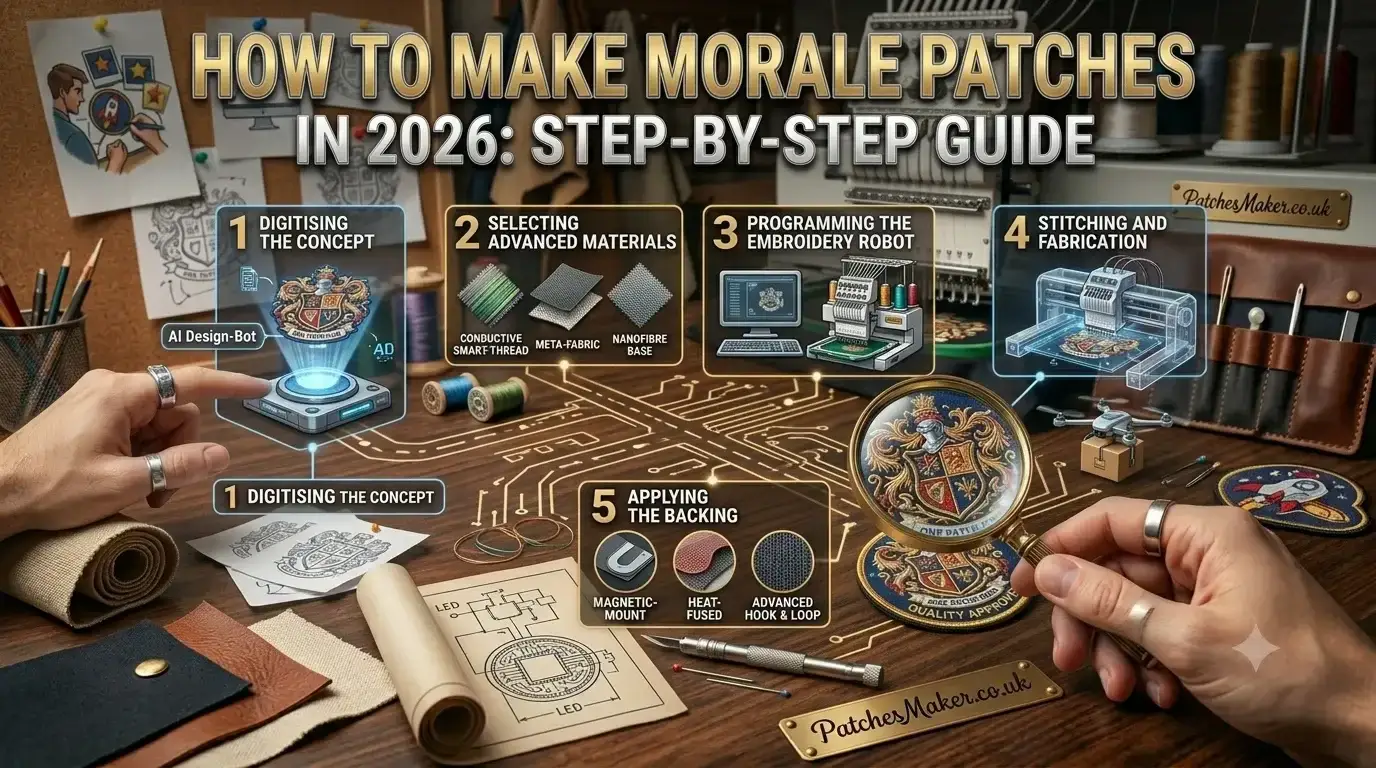
Making a morale patch is one of the easiest things to do once you understand the basics. These emblems have won hearts with their symbolic nature. What once started as a strong way of expression among the armed forces during wars is today seen on jackets and accessories.
This shows that morale patches have come a long way from their military origins. You will spot them everywhere in this era. Some people collect them as a hobby, while others use them to represent their team or personal interests.
If you’re thinking about creating your own morale patch, the process is much easier than many people expect. Keep reading to find out each stage of the process, which will help you create a patch that looks great and lasts for years.
How To Create Morale Patches The Right Way
You don’t need to be a professional designer or have specialist equipment. The best custom morale patches begin with the right materials and an understanding of how different patch options affect the final result.
Let’s take a look at everything from scratch.
What Are Morale Patches?
A morale patch is a decorative patch designed to express humorous situations or achievements.
Morale patches often allow for far more creativity when you compare them with standard patches.
They reflect a particular message or personality by featuring
- High-quality logos
- Well-made artwork
- Presence of slogans
- Mascots
- Symbols
- Custom illustrations
Most of these patches are attached using hook-and-loop fasteners (commonly referred to as Velcro), which makes them easy to swap whenever you want a different design.
Designing The Perfect Morale Patch For Yourself
Here is everything you need to know to bring your morale patch vision to life.
Decide the Purpose of Your Patch
Think about why you’re creating the patch before you start sketching the ideas.
Ask yourself:
- Who will wear it?
- Where will it be attached?
- Should it look professional, tactical, humorous, or artistic?
- Will it be produced once or reordered regularly?
The answers will influence almost every decision that follows, from colours to materials.
For example, a motorcycle club patch usually has different design priorities than a promotional patch created for a business event.
Having a clear purpose will help you avoid overcrowding the design with unnecessary details.
Choose the Right Shape and Size
A common mistake among people is that they shift all their focus on the artwork while overlooking the patch dimensions.
Think about where it will be used.
Smaller patches work well on:
- Caps
- Backpacks
- Uniform sleeves
- Chest panels
Larger patches are often more suitable for jackets, tactical bags, display collections and event merchandise.
Simple shapes such as rectangles and shields are popular because they’re versatile and easier to manufacture. Custom die-cut shapes can create a distinctive appearance, but they may increase production complexity depending on the design.
Just make sure important text remains readable from a comfortable viewing distance, depending on the size you choose.
Choose the Best Material
The material you choose has a big impact on how your morale patch looks and performs. Each option has its own strengths, so it’s worth thinking about where the patch will be used before making a decision.
- PVC Patches
Custom British army patches in PVC form are made from soft rubber instead of thread, which gives them the characteristic of becoming highly resistant to any harsh conditions or unsuitable factors.
They’re commonly used for:
- Tactical equipment
- Outdoor clothing
- Airsoft teams
- Military-inspired designs
PVC is often the better option if your patch is about to face rough conditions.
- Embroidered Patches
Embroidered patches remain one of the most popular choices. Raised stitching creates a classic textured finish that works well for traditional designs.
They’re ideal for:
- Clubs and organisations
- Uniforms
- Corporate branding
- Event merchandise
- Woven Patches
Woven patches are worth considering if your patch contains small lettering or any sort of intricate artwork.
The woven nature makes it capable of reproducing finer details without the raised texture of embroidery.
They’re particularly suitable for detailed logos and illustrations that would be difficult to stitch cleanly.
Design Artwork That Works as a Patch
Designing for fabric isn’t quite the same as designing for print.
You might have noticed that details that look sharp on a computer screen instantly disappear when they are stitched onto a patch.
To achieve the best results:
- Keep text short and easy to read
- Avoid overly detailed illustrations
- Use bold outlines where possible
- Limit the number of colours to maintain clarity
- Leave enough spacing between design elements
Don’t forget to check the clarity of your logo on the patch when it gets reduced to its final size.
A simple and well-balanced design will always produce a better-looking patch than one filled with unnecessary details.
Select the Right Backing
The backing determines how your patch attaches to clothing or equipment.
There is no perfect answer to this, as the right choice will depend on your patch design needs.
- Hook-and-Loop Backing
This is the most common choice for morale patches as it allows patches to be attached and replaced whenever needed.
- Sew-On Backing
Sew-on patches provide a permanent attachment to club clothing or any other type of garment where your patch won’t need to be changed.
- Iron-On Backing
Iron-on patches are popular for casual clothing because they can be applied quickly with heat.
However, garments that experience heavy use often benefit from additional stitching around the edges for improved durability.
Select the Right Backing
Most patch makers UK provide a digital proof before the production process begins.
This stage is your opportunity to catch mistakes before the patches are made.
Take time to check:
- Spelling and punctuation
- Colours
- Artwork placement
- Patch size
- Border style
- Overall proportions
It’s also worth viewing the proof at the patch’s actual size.
Designs that look perfect when enlarged on a monitor can appear very different once reduced to a small patch!
Making changes at this point is far easier and far less expensive than correcting mistakes after production.
Production and Quality Checks
Production begins once your design gets approved.
Manufacturing time will depend on the material and quantity ordered.
Inspect a few samples of your patches when they arrive.
Check that:
- Colours match the approved proof
- Borders are neat and secure
- Stitching or moulding is consistent
- Hook-and-loop backing attaches properly
- There are no loose threads or visible defects
A quick quality check will ensure every patch meets the standard you expected.
Why Morale Patches Remain Popular in 2026
Custom patches continue to grow in popularity because they are a robust combination of practicality and personal expression.
The role of morale patches can be described as:
- Represent clubs and organisations
- Personalise tactical bags and clothing
- Celebrate events or achievements
- Build team identity
- Create limited-edition collectables
- Promote businesses in a memorable way
The durability and reusability of morale patches make them an affordable branding option for many organisations.
Common Design Mistakes to Avoid
Inconsistencies in a few small details can ruin the appearance of your patches.
Here are some of the most common errors present on a morale patch.
- Using fonts that are too small to read
- Addition of too many colours to a compact design
- Embedding unnecessary details that disappear during production
- Choice of the wrong backing for the intended use
- Skipping the proof approval stage
- No extra space around important design elements
Keeping the design clean and purposeful will raise your chances of getting stronger results on your patch.
Final Tips for Creating a Patch You’ll Be Proud Of
A successful morale patch isn’t necessarily the most complicated one. Following a simple approach can often bring you something that exceeds your expectations.
Keep these final points in mind before placing your order to experience the real role of military patches.
- Design with the final patch size in mind rather than the size of your computer screen
- Select colours that provide enough contrast to make the artwork easy to recognise
- Limit the amount of text whenever possible on the patch
- Think about where the patch will be worn and choose the materials according to it
- Order a sample first if you’re producing patches for a large event
Ask a few people to review the design before production begins if you are creating patches for a team or an organisation. A fresh perspective can help you spot details you may have overlooked.
Remember, a morale patch is often worn for years. Spending a little extra time refining the design now can save disappointment later!
The Morale Patch Help Desk
What size is best for a morale patch?
The general size range for morale patches is 50 mm and 90 mm, and the exact answer depends on where they’ll be attached. You can choose small patches for caps and sleeves and opt for larger designs if you need to use them on tactical gear or backpacks.
Which one is better? Embroidered or PVC morale patches?
It depends on the way you are planning to use them. Embroidered patches look good on uniforms because of their traditional stitched appearance. On the other hand, PVC patches can show remarkable resistance under wet and muddy conditions because of their resistant nature.
Can I order just one custom morale patch?
Why not? A lot of manufacturers on the internet offer options for low minimum order quantities but ordering in large quantities can be a more affordable approach, as it decreases.
How long does it take to make custom morale patches?
The duration depends on the manufacturer and the details of your order. Most of the orders are delivered within two to four weeks, but you can also avail rush delivery options in case if it’s very urgent.
What file format should I use when submitting my artwork?
Manufacturers prefer options such as AI, EPS, or PDF because they maintain image quality at any size. You can use a high-resolution PNG or JPEG if those aren’t available. Just make sure that the artwork is clear and large enough for production.
Key Takeaways
Every decision in creating the morale patch, from the material and backing to the artwork and size, affects how the finished patch looks and performs. Just plan carefully and review every detail before production, and you can easily create a patch that reflects your idea and is always ready for everyday use.

As the content specialist for PatchesMaker.co.uk, I focus on delivering practical insights into the world of custom patch manufacturing across the UK. My blogs cover everything from military and morale patches to promotional and corporate branding solutions. I break down production processes, quality standards, backing options, and design considerations in a clear and professional manner. Through informative and research-driven content, I aim to help businesses, sports teams, and institutions make confident decisions when investing in custom patches that reflect their brand values.